Wedding day
Wedding Morning Ideas: A Calm Start and Meaningful Moments
The wedding morning is part of your wedding, not merely the preparation before it. A few deliberate choices can make it feel calm and personal: food you can actually eat, enough time to dress, a trusted person holding the schedule and one meaningful moment that does not need an audience. Plan around real tasks before adding traditions.
Work backward from the ceremony
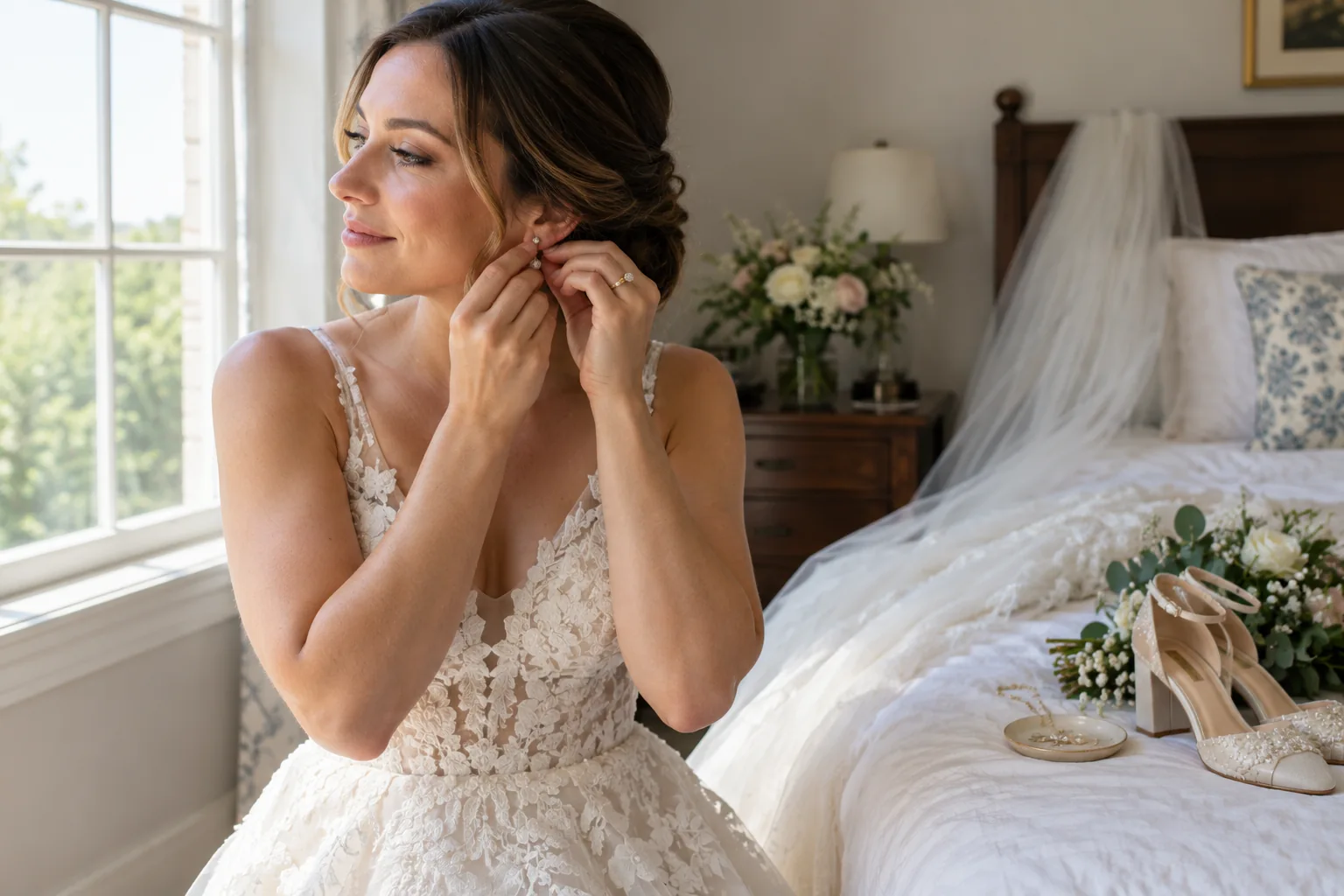
Start with the time you need to arrive, then add travel, dressing, photographs and any hair or makeup appointments. Confirm those estimates with the people providing the services. Include a buffer for small delays and avoid assuming every task can happen at once.
Write down who needs to be where and when. If several people are getting ready together, agree an order based on departure times and practical needs, not status. One person may need to dress earlier for photographs; another may be helping a child or traveling from elsewhere.
Your preparation schedule should also include breakfast, water and a restroom break. These may sound obvious, but they disappear easily when a timeline contains only appointments. A ceremony-ready time should mean fully dressed with essential belongings gathered, rather than beginning the final task at that moment.
A sample morning you can adapt
For an afternoon ceremony, you might begin with breakfast, move into staggered preparation appointments, pause for a private letter, then dress before photographs and departure. Use that order as a starting point, not a universal timetable. Early ceremonies, cultural traditions and multiple locations need different plans.
Put fixed commitments on the schedule first. Then add flexible moments around them. If you want to exchange gifts, allow enough time to enjoy them without making the next person wait. If photographs are planned during preparation, tell the photographer which moments matter and which you want to keep private.
Share the final version with your officiant, photographer, transport contact and one trusted helper. Make changes in one place and tell the affected people directly. Several conflicting screenshots of the schedule can create more confusion than no schedule at all.
Decide who belongs in the getting-ready space
Choose people who help you feel comfortable rather than inviting everyone because of a title or tradition. A smaller group may make the morning quieter; a lively family group may be exactly what you want. Discuss it with your partner so both have the support they prefer.
Set expectations about arrivals, photographs and responsibilities. Someone helping with clothes should know how the fastening works before the last minute. A friend arriving to socialize should not unexpectedly become responsible for ironing, food and transport.
Check the room’s practical limits: mirrors, outlets, chairs, bathrooms and somewhere to place bags. Keep walkways clear. If the venue provides a preparation room, confirm its access time and whether it will be available after the ceremony. Avoid leaving valuables in a space that will later be unlocked or used by others.
Letters that feel like you
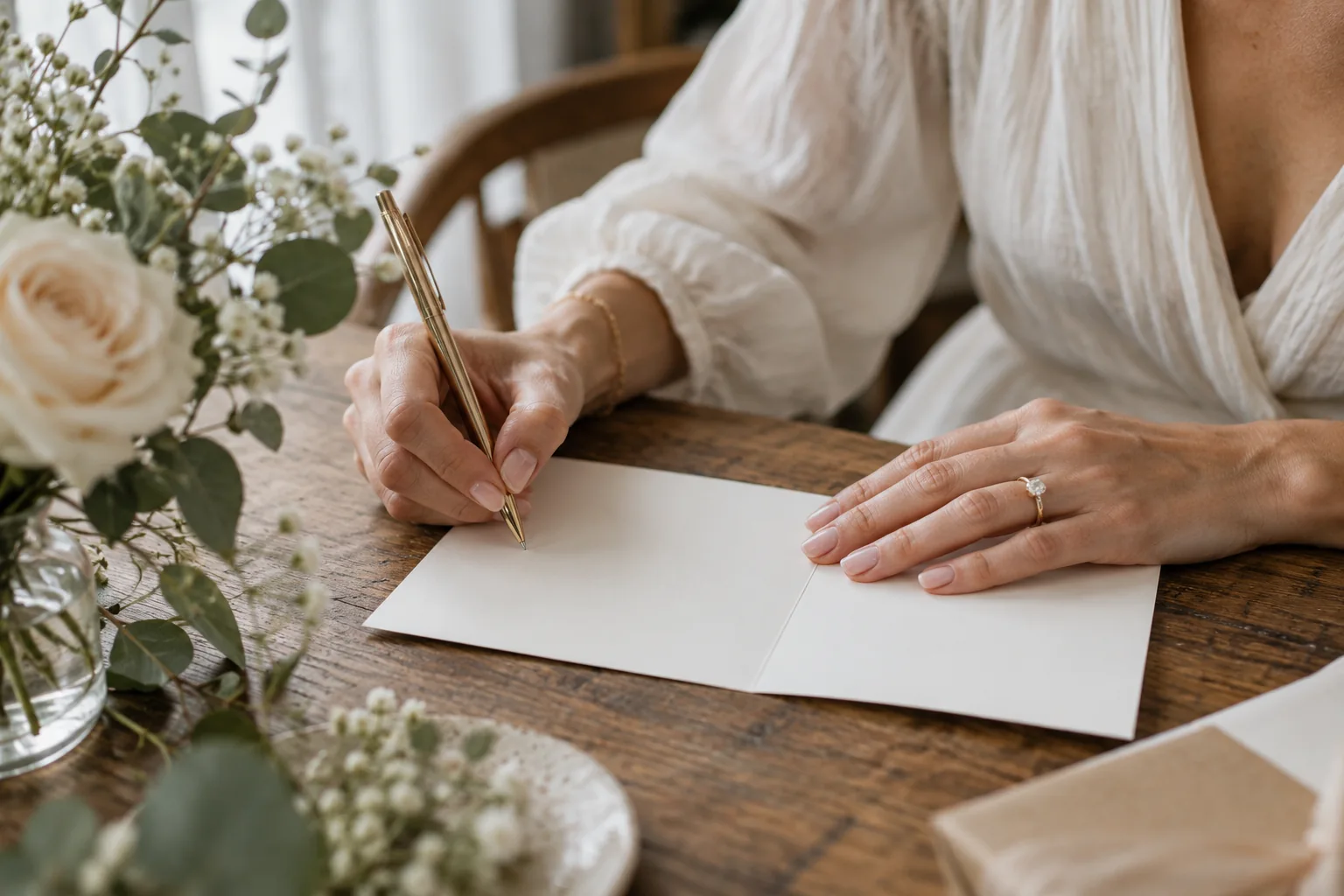
A private note can hold the words you do not want to say in public. Write it before the wedding week if possible. Mention a moment you remember, something you value in your partner and one ordinary part of life together you look forward to. It does not need to summarize your entire relationship.
Agree whether you will read letters alone, together or on camera. A photographed letter exchange is not automatically more meaningful than a private one. If one partner dislikes surprises, discuss the plan rather than assuming a grand reveal will be welcome.
Keep the note kind and grounded. This is not the moment to introduce a difficult conversation or promise a life without disagreement. If you need help beginning, the structure in our guide to meaningful wedding messages can be adapted into a more personal letter.
Gifts and traditions without pressure
A wedding morning gift is optional. You might choose a handwritten recipe, a small keepsake connected to a shared memory or something useful for the day. Set a spending boundary together if exchanging gifts could create unequal expectations. A thoughtful note can stand on its own.
Some couples enjoy breakfast together, a first look, separate preparation or a brief walk. None of those choices determines the quality of the marriage. Choose the tradition because it fits your comfort and schedule, not because an online checklist calls it essential.
If you want matching preparation clothes, think about fit, temperature and how they come off after hair or makeup is complete. Avoid asking friends to buy special items unless you have discussed the cost. For clothing you can use afterward, our newlywed outfit ideas focus on everyday wear rather than one-use purchases.
Prepare a small practical kit
Gather documents, rings, ceremony notes, clothing accessories, prescribed medication you normally need and any essentials for your individual circumstances. Place them in clearly identified bags. Assign a named person to important items rather than saying “someone will bring them.”
Useful additions may include a basic sewing kit, a stain cloth, comfortable shoes, a phone charger and snacks you know suit you. Keep the kit compact enough that it can be carried and found. A huge bag of hypothetical solutions is less helpful than a few essentials in a predictable place.
Test clothing in advance: sit, walk and use stairs in it. Check fastenings and arrange any steaming before the morning becomes busy. If an item needs professional care, follow its instructions rather than trying an unfamiliar fix minutes before departure.
Leave emotional space in the schedule
You may feel excited, quiet, tearful or completely practical. There is no required emotional performance. Tell the people around you what helps: calm music, conversation, a few minutes alone or reassurance about the next step.
Ask a helper to handle routine messages while you get ready. They should know which decisions require your attention and which they can make within agreed limits. You can silence group chats without becoming unreachable for genuine problems if one clear contact route remains open.
If a planned moment stops feeling right, simplify it. A letter can be read later; an optional photograph can be skipped; a decorative detail can remain unpacked. Protecting the essential schedule and your comfort is more useful than completing every idea you saved.
The last check before you leave
Confirm that both partners have transport, the right destination and the items assigned to them. Check that nobody has been left waiting for a lift. If you are leaving a hotel or rented room, follow its checkout and key arrangements and make a plan for collecting remaining belongings.
Take one quiet breath before the move from preparation to ceremony. A short pause can help you recognize the day instead of experiencing it only as a sequence of tasks. You can also plan a private moment after the ceremony using our intimate wedding planning ideas.
A successful morning is not one in which nothing changes. It is one with enough time, clear responsibilities and permission to adapt. Keep the moments that matter to you, and let a practical schedule carry the rest.